Why Do Jaw Crusher Wear Parts Wear Out So Quickly?
Jaw Crusher Wear Parts rarely fail without a reason, even when the damage seems sudden. Jaw plates and cheek plates face repeated compression, sliding abrasion, and impact as rock moves through the crushing chamber. A hard, silica-rich feed can remove material faster than softer stone, while uneven feeding may concentrate wear on one side. The result can be visible grooves, a rounded profile, or a plate that loses its grip on the rock.
Small details matter. Fine material entering with the feed may increase abrasive contact, and an incorrect closed-side setting can raise crushing forces. Poorly distributed feed, loose fasteners, or a plate that does not seat correctly can also shorten service life. These causes often overlap, so replacing a worn plate without checking operating conditions may only repeat the problem. That is easy to miss.
There is no reliable wear-life figure that suits every crusher. Alloy, feed properties, machine design, operating hours, and maintenance practices all affect the result. A practical inspection compares both jaw profiles, checks mounting surfaces, and records wear at consistent intervals. Operators should also review feed size, chamber loading, and setting changes against the equipment manufacturer’s guidance. Measurements help more than memory. Still, wear patterns do not tell the whole story; operators can mistake normal wear for a setup fault, or overlook a gradual change in the feed. This introduction examines why Jaw Crusher Wear Parts wear out quickly and how careful observation can help identify the actual cause before replacement becomes routine.
Jaw Crusher Wear Parts: Main Components and Their Functions
Why Do Jaw Crusher Wear Parts Wear Out So Quickly?
Jaw Crusher Wear Parts: Main Components and Their Functions
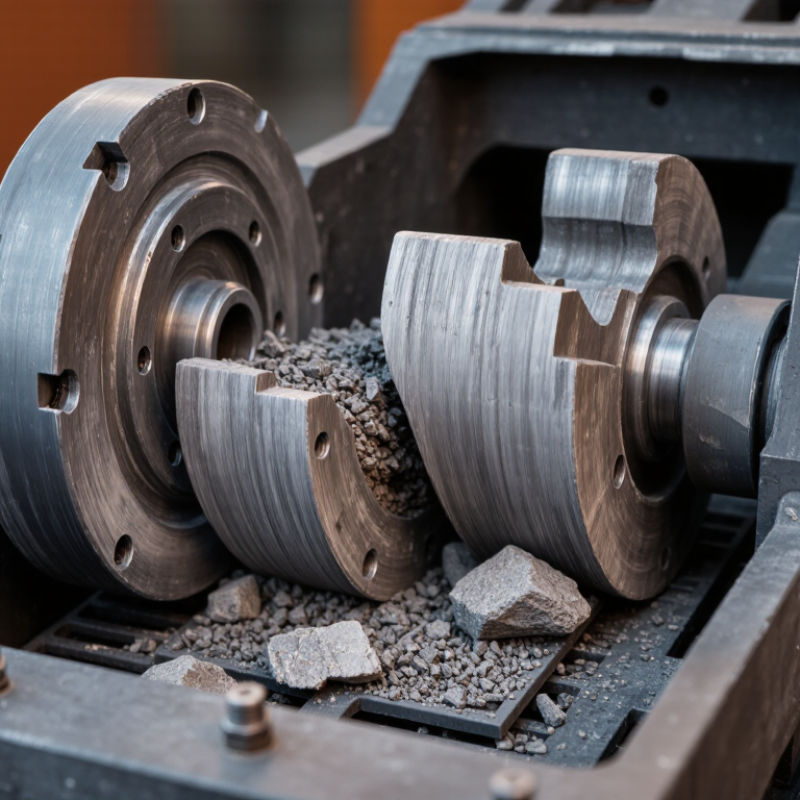
A jaw crusher’s working chamber relies on several parts with different jobs. The fixed jaw plate forms one wall; the moving jaw plate swings toward it, compressing rock between their ridged faces. These plates take the direct abrasion and impact. Their profile and material affect grip, product size, and service life. The cheek plates protect the chamber’s side walls, where trapped fines can scrape exposed metal. Small gaps matter.
Behind the moving jaw, the pitman carries the crushing motion from the eccentric shaft. The toggle plate transfers force and can act as a mechanical safety link if uncrushable material enters.
Flywheels help steady the motion, while bearings support the rotating shaft and need reliable lubrication. Not all wear looks alike. A rounded jaw tooth may reduce bite; a cracked toggle points to a different problem.
The USGS Mineral Commodity Summaries 2025 estimates U.S. crushed-stone output at about 1.5 billion tons in 2024, underscoring the scale of aggregate processing. That figure is not a wear-rate benchmark.
Inspect jaw profiles, fasteners, and bearing temperature under actual feed conditions; blaming the plates alone can miss the cause.
One assumption deserves checking: uneven wear may reflect feed distribution, not simply poor material.
How Crushing Forces Cause Wear
Jaw crusher wear parts face more than simple pressure. Each stroke squeezes rock between the fixed and moving jaw, concentrating force where particles make contact. Hard, angular stone can bite into the jaw plate, leaving small grooves that deepen over repeated cycles. The force is not evenly spread. A few oversized lumps may strike one area again and again.
Impact adds another kind of damage. When feed drops into the chamber, heavier pieces can hit the lower jaw with a sharp blow. Meanwhile, smaller particles slide along the plate and scrape its surface. That is only part. Uneven feeding can keep one side of the chamber busier, so its wear pattern may differ from the other side. Moisture and sticky fines can also change how material moves, though their effect depends on the rock and operating conditions.
It is tempting to blame poor plate quality whenever wear looks severe. That explanation may miss the real pattern. Check whether the feed is consistent, whether the chamber is loading evenly, and where the deepest grooves appear. A simple inspection with a straightedge can reveal an uneven profile. Measurements matter more than a quick glance. Still, wear readings are not perfect; loose scale, irregular stone marks, and rushed checks can distort them. Compare the same locations over time, and note any sudden change after adjustments or a shift in feed size.
Key Factors That Accelerate Wear
Jaw crusher wear parts rarely fail for one reason. Their service life often shrinks when abrasive rock, poor feed control, and incorrect settings combine. Quartz-rich stone can score jaw plates like grit on steel. Wet, sticky fines may pack between ribs, reducing grip and creating uneven contact. Oversized chunks landing on one side also concentrate impact in a small area.
Operating conditions matter just as much. A closed-side setting that is too tight increases crushing pressure and may accelerate plate wear. A steady, centered feed spreads loading across the chamber; intermittent dumping often leaves one zone working harder. Worn cheek plates, loose fasteners, or a misaligned toggle can add vibration and abnormal contact. These signs are easy to miss during a quick walk-around. Wear patterns are not always neat, and one measurement may not explain them.
Tips: Check plate profiles at consistent intervals, compare left and right wear, and record feed size, moisture, and setting changes. Clear packed material safely during shutdown. If wear suddenly becomes uneven, inspect alignment and fasteners before changing settings.
Common Wear Patterns and Their Causes
Jaw plates rarely wear evenly. A polished band near the lower chamber often points to repeated sliding abrasion, while chipped tooth tips suggest impact from large or poorly distributed feed. Silica-rich rock makes the problem harsher; trapped fines can act like grinding grit between the jaws. It shows up fast.
Wear concentrated on one side often reflects off-center feeding, not simply weak steel. Check the feed chute, jaw alignment, and whether material enters across the full chamber width. Deep grooves deserve attention. They may indicate abrasive particles repeatedly following the same path. Cracks or broken corners can follow impact overload, loose mounting, or excessive vibration; inspect fasteners and supports before blaming the plate alone.
The U.S. Geological Survey’s Mineral Commodity Summaries 2024 estimated U.S. crushed-stone output at about 1.5 billion tons in 2023, illustrating the scale of abrasive service across the sector. For controlled comparison, ASTM G65 measures abrasion loss using dry sand and a rubber wheel. But it does not reproduce jaw-crusher impact, pressure, or feed variation, so lab results cannot predict service life by themselves. Field records help: photograph wear at set intervals and compare it with feed size and rock type. A few measurements beat guesswork, though operating conditions still change.
Ways to Reduce Wear and Extend Service Life
Why Do Jaw Crusher Wear Parts Wear Out So Quickly?
Ways to Reduce Wear and Extend Service Life
Jaw plates wear quickly when abrasive rock repeatedly slides across their surfaces. Hard, angular feed and uneven loading can accelerate the damage. The U.S. Geological Survey’s Mineral Commodity Summaries 2024 estimated U.S. crushed-stone production at about 1.5 billion tons in 2023. That scale makes routine wear checks worthwhile, though the figure does not predict any crusher’s service life.
Match the jaw profile and material to the feed, then keep the chamber evenly loaded. Avoid feeding mainly on one side; it can create uneven wear and poor product sizing. Check the closed-side setting after adjustments, since an unnecessarily tight setting may increase crushing forces. Remove tramp metal before it reaches the chamber. Small pieces matter.
Measure plate height or thickness at the same marked points during inspections. Rotate reversible plates when the wear pattern and equipment guidance allow it; replace them before cracks or severe tooth loss develop. ASTM’s jaw-crusher gouging-abrasion test method, G81, offers a controlled way to compare material wear resistance, but it cannot reproduce every plant condition. Keep a simple log of feed type, settings, and measurements. It will not explain every failure. Still, it can reveal a pattern before a plate becomes unsafe to use.