Top Types of Jaw Crushers for Your Buying Guide?
When it comes to the "Type Of Jaw Crusher," understanding your options is crucial for making informed decisions. Industry expert, John Smith, emphasizes, "Choosing the right jaw crusher can enhance efficiency and productivity." This statement highlights the importance of selecting the appropriate machinery for your specific needs.
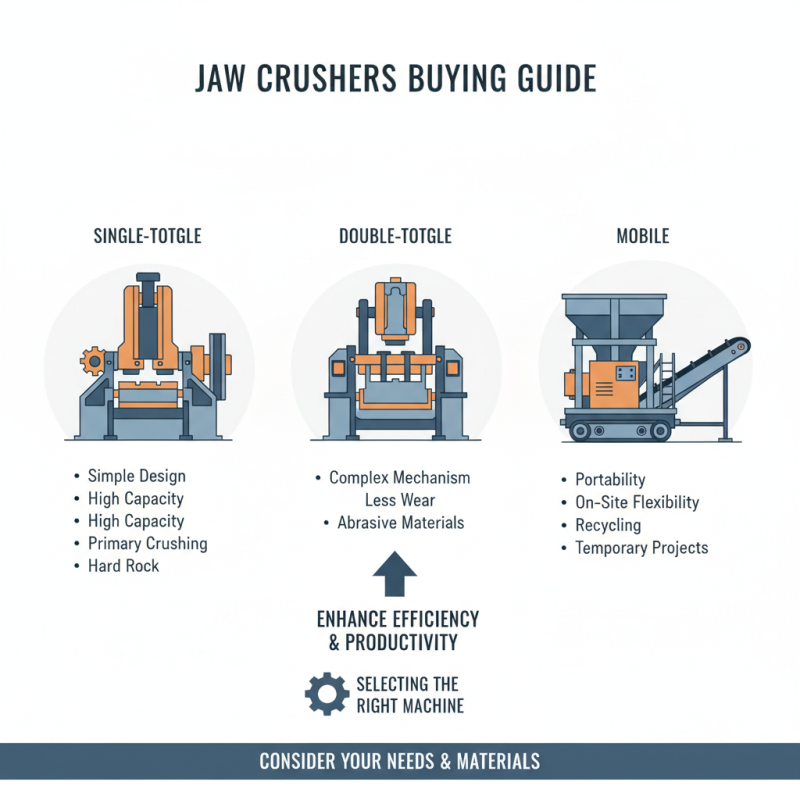
Different types of jaw crushers exist, each with its unique features and applications. For example, the single-toggle and double-toggle jaw crushers offer distinct operational advantages. Knowing their differences can help you determine which is best for your project. However, many buyers often overlook some essential characteristics that can impact overall performance.
In this competitive market, selecting the right jaw crusher requires careful consideration. Potential buyers should reflect on their requirements and the specific materials they will work with. While it's easy to focus solely on price, attention to detail and expertise can lead to better choices. A reliable "Type Of Jaw Crusher" can significantly influence the success of your operations.
Types of Jaw Crushers: An Overview of Key Variants
When it comes to jaw crushers, understanding the various types is essential for making an informed purchase. The most common types include the single-toggle jaw crusher and the double-toggle jaw crusher. Single-toggle versions are known for their simplicity and are often preferred for their ease of maintenance. In contrast, double-toggle crushers provide greater flexibility and durability but may require more regular upkeep.
Knowing the material you're working with is crucial. Crushers vary in effectiveness based on the hardness of the material processed. A crushing solution that works well for gravel might not perform as efficiently with granite. Weigh your options carefully before making a decision.
Tips for buyers: Always check the specifications of the jaw crusher. Assess both the size and type of material it'll handle. The right choice will significantly affect productivity. Don't rush—consider your long-term needs before finalizing a purchase. Test the machine if possible. Understanding its capabilities in practice may reveal hidden issues that specs alone won't show.
Top Types of Jaw Crushers
This bar chart depicts the crushing capacity of various types of jaw crushers, measured in tons per hour. Each type serves different purposes in mining and construction, with distinct operational efficiencies.
Understanding the Design and Functionality of Jaw Crushers
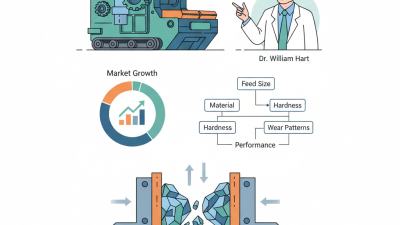
Jaw crushers are essential in various industries, from mining to construction. They function by compressing material between two jaws, one stationary and the other movable. This design allows for efficient size reduction of hard and abrasive materials. According to a recent industry report, the global jaw crusher market is expected to reach $1.2 billion by 2026, reflecting a compound annual growth rate (CAGR) of 3.5%. This growth underscores the vital role of these machines.
The design of jaw crushers is often overlooked. They come in different configurations, including single toggle and double toggle designs. Each has unique benefits. Single toggle crushers are lighter and can operate at higher speeds. However, they might wear out faster. Double toggle models provide greater force but can be more complex. Understanding these distinctions is crucial for selecting the right type.
Operational challenges exist in jaw crusher use. For example, excessive wear can lead to high maintenance costs. Additionally, improper feeding can reduce efficiency. Data indicates that optimized feed size can improve throughput by up to 30%. These factors must be considered when investing in jaw crushers to ensure long-term reliability.
Top Types of Jaw Crushers for Your Buying Guide
| Type |
Design Features |
Functionality |
Typical Applications |
| Single Toggle Jaw Crusher |
Simple design, fewer parts, easy maintenance |
Ideal for primary crushing, produces a high-quality product |
Mining, construction, industrial applications |
| Double Toggle Jaw Crusher |
More complex design, robust structure |
Offers higher throughput and efficiency |
Quarrying, heavy mineral processing |
| Mobile Jaw Crusher |
Portable, versatile, equipped with tracks |
Suitable for onsite crushing, flexible usage |
Recycling, rock crushing, demolition |
| Laboratory Jaw Crusher |
Compact design, suited for smaller batches |
Ideal for material testing and sample preparation |
Research, educational purposes, material analysis |
Factors to Consider When Choosing a Jaw Crusher
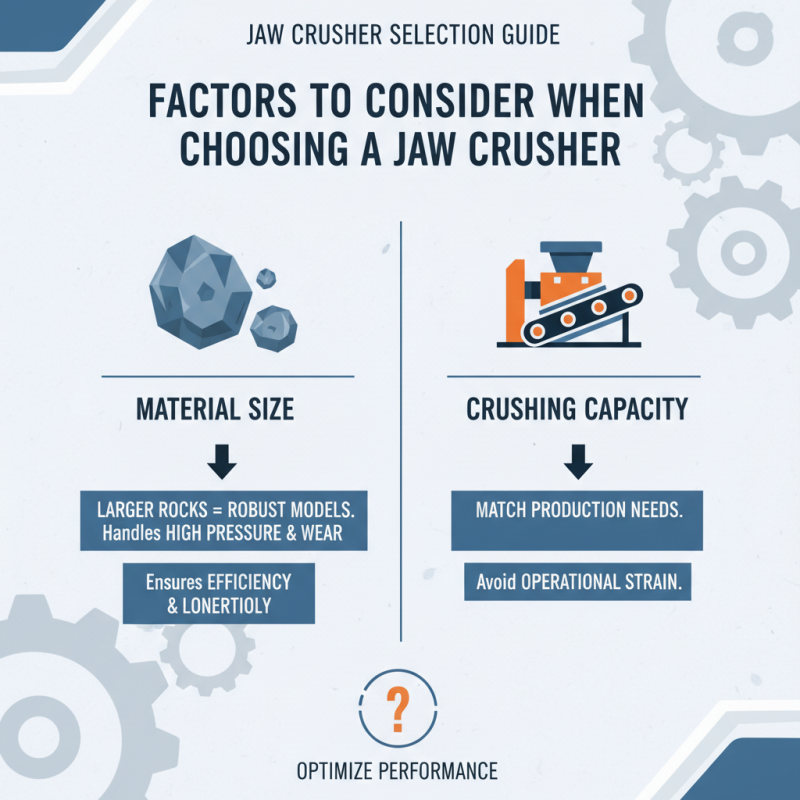
When choosing a jaw crusher, several critical factors come into play. The size of the material you intend to crush matters. Larger rocks require robust models. These machines must handle high pressure and significant wear. Therefore, selecting the right size ensures efficiency and longevity. Equally important is the crushing capacity. You’ll want a model that can keep up with your production needs, but too high a capacity can lead to operational strain.
Consider the design and material of the jaws. Different designs, like smooth or ribbed jaws, contribute to how effectively the crusher can break down materials. Additionally, hard materials may necessitate a more durable jaw. You should also think about maintenance. Some crushers require more frequent upkeep, which can lead to increased downtime. Assessing the ease of maintenance is crucial.
Energy consumption and efficiency are vital considerations too. Crushers with higher efficiency can save on operational costs. Monitor power usage over time. Sometimes, a less powerful model can meet needs just as well, creating a more cost-effective solution. Ultimately, learning through experience can lead to improved decision-making. Reflecting on past purchases can guide future choices.
Comparative Analysis of Popular Jaw Crusher Brands
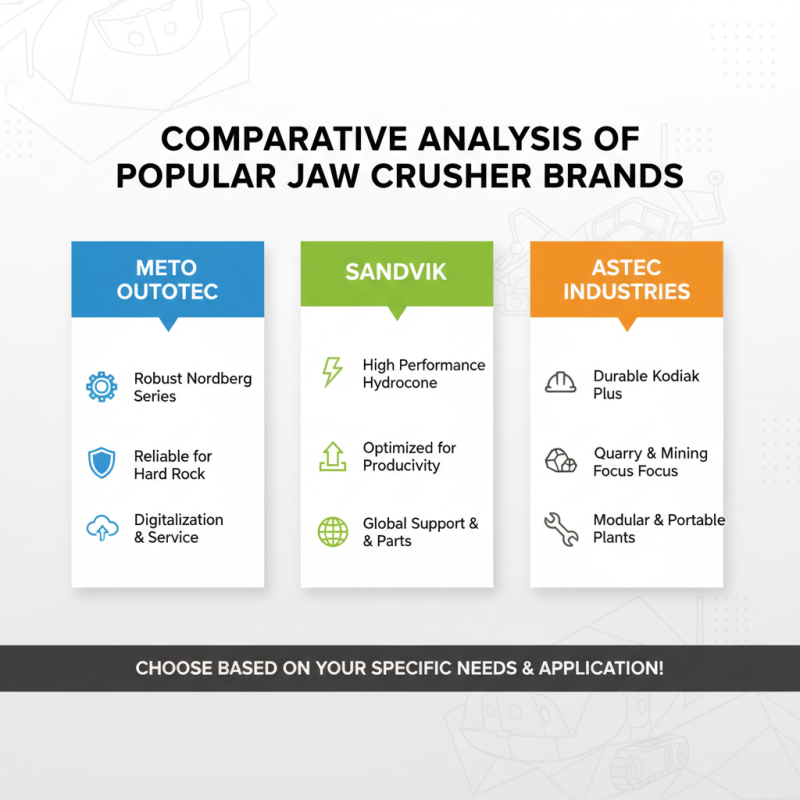
When selecting a jaw crusher, it's crucial to compare various brands. Each brand offers unique features and specifications. A comparative analysis can help you understand these differences.
Many popular models vary in jaw sizes, output capacities, and energy efficiency. Some excel in material hardness, while others are better suited for softer materials. It's essential to match the crusher type with your processing needs.
Cost is another factor to consider. Some brands may appear to offer lower prices, but hidden costs can arise, like maintenance and part replacement. Evaluating long-term expenses is vital. It’s worth reflecting on your actual operational needs rather than just initial investment costs. The right choice can significantly impact efficiency and profitability.
Maintenance and Durability of Different Jaw Crusher Types
When considering the maintenance and durability of jaw crushers, a few key factors come into play. Regular inspections can drastically extend the life of your equipment. Check for wear and tear on jaws often. Signs of wear may include cracks, chipped edges, or uneven surfaces. These issues can affect the crusher's efficiency. Keeping an eye on these aspects can save time and money in the long run.
Choosing the right material for jaw crushers is vital. Some types are constructed with high-strength steel, enhancing durability. Others may use different alloys that resist abrasion. However, even the best materials require proper care. Lubrication is essential to reduce friction between moving parts. Inspecting lubricant levels should be routine and should not be overlooked. This can prevent unnecessary breakdowns and costly repairs.
While many manufacturers promote long-lasting performance, not all jaw crushers are created equal. Durability often hinges on the operating environment. Crushers used in harsh conditions face increased wear. Operators should consider the specific demands of their applications. This knowledge can influence their choices and ensure more reliable equipment over time. It is also wise to gather feedback from users. Their experiences can highlight unrecognized shortcomings and provide valuable insights.