Leave Your Message

Gyratory Crusher Wear Parts How to Choose the Best Options?

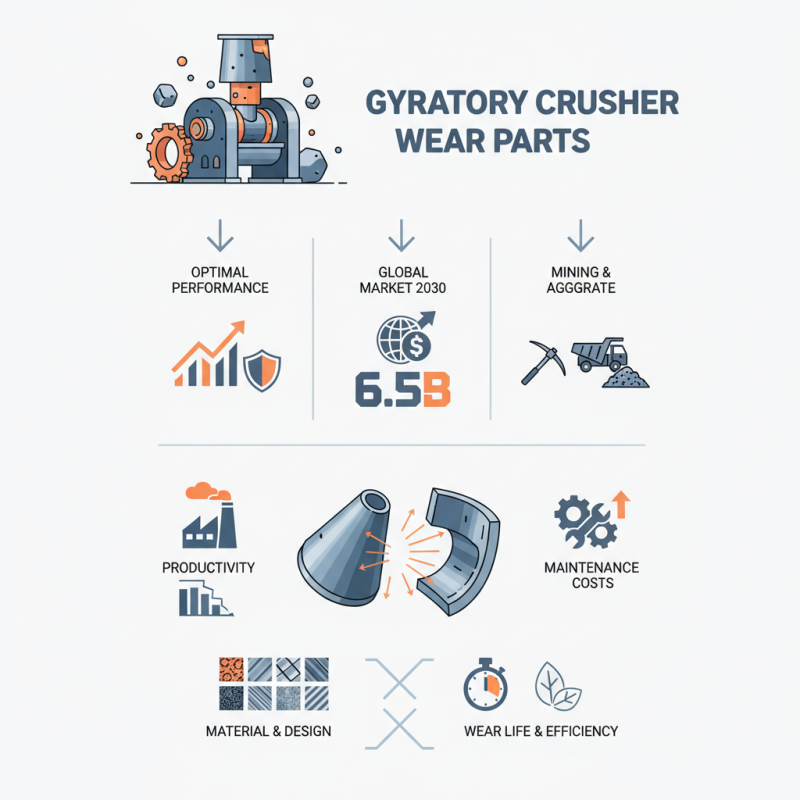
Choosing the right Gyratory Crusher Wear Parts is crucial for optimal performance. The global market for crushing equipment is projected to exceed $6.5 billion by 2030. This growth underscores the significance of wear parts in the longevity and efficiency of gyratory crushers. In the mining and aggregate sectors, wear parts directly influence productivity and maintenance costs.

Wear parts, including mantles and concaves, face immense stress in crushing applications. The quality of these components affects not only the efficiency of material processing but also the overall operational costs. Data from industry reports indicate that poor wear part choices can lead to a 20% reduction in productivity. Failure to integrate proper wear part strategies can result in downtime and increased operational delays.

It's important to remember that not all wear parts are created equal. Factors such as material composition and design vary significantly among manufacturers. This variability can impact wear life and performance. Reflecting on these options is vital to make informed decisions. Understanding the implications of your choices in Gyratory Crusher Wear Parts is essential for sustainable operations.
Gyratory Crusher Wear Parts How to Choose the Best Options?

Understanding Gyratory Crusher Wear Parts: A Comprehensive Overview

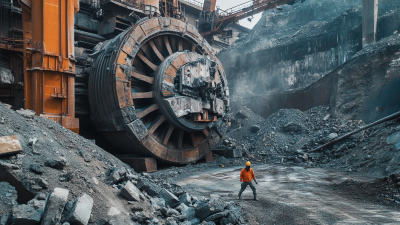
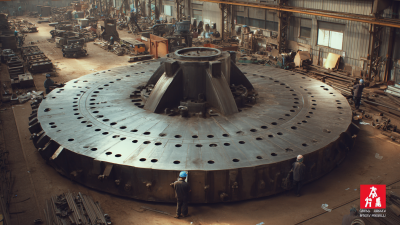
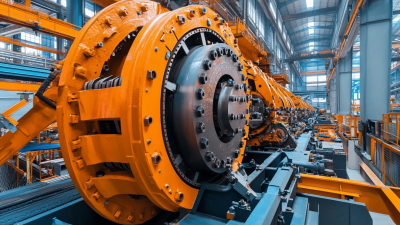
Gyratory crushers play a pivotal role in the mining and aggregates industries. They are engineered to efficiently crush rock and ore. Understanding the wear parts of these machines is essential for optimal performance and longevity. The primary wear components include mantle liners and concaves. These parts experience significant wear from rocks and materials. Choosing the right materials for these components can influence efficiency and costs.

Tips: Monitor wear rates regularly. This helps in proactive maintenance. A study by the Mining Industry Journal indicates that inappropriate choices in wear materials can reduce the lifespan by up to 30%. Opt for high-quality steel alloys. They often outperform standard materials in harsh environments.

Material selection isn't straightforward. Many factors affect performance, including hardness and toughness. Misjudging these factors leads to frequent part replacements. This not only inflates costs but also increases downtime. Always evaluate suppliers and their materials according to specific site conditions. Understanding the specific application can help in making more informed choices. Aim to strike a balance between cost and durability for wear parts.

Key Factors in Selecting Wear Parts for Gyratory Crushers

Gyratory Crusher Wear Parts How to Choose the Best Options?

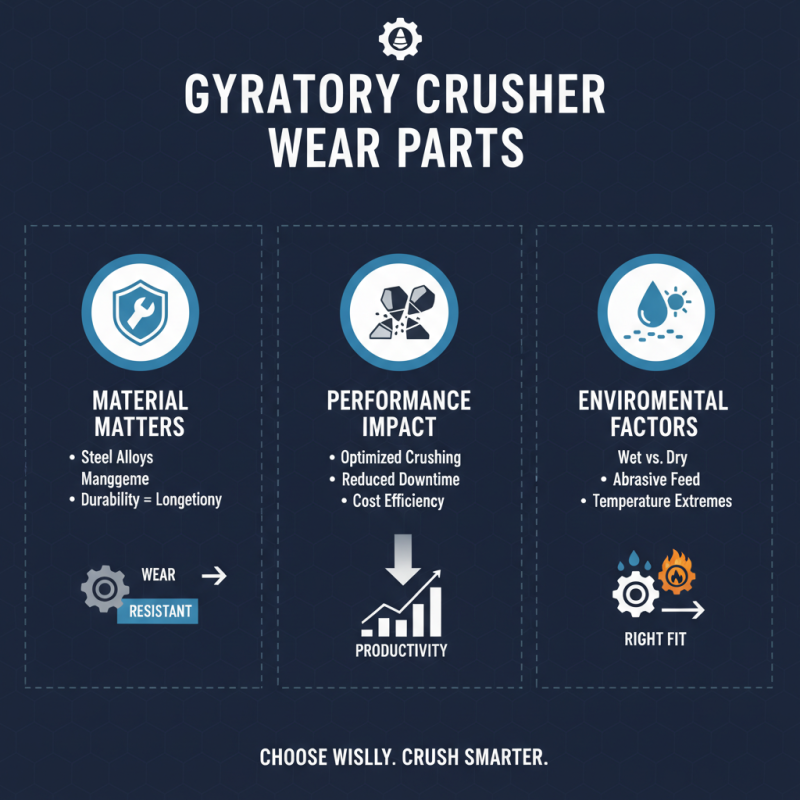
Choosing the right wear parts for gyratory crushers can significantly impact performance. Consider the material used in these components. High-quality materials resist wear and tear, ensuring longevity. Steel alloys and manganese are commonly used due to their durability. It's crucial to evaluate the specific environment where the crusher operates. Different materials may perform better under varying conditions, such as wet or dry environments.

Tips: Assess the material hardness. Softer materials may wear quickly.

Consult with professionals to understand your unique needs. They can offer insights into the best wear parts suited for your operations. Pay attention to the shape and size of the wear parts. Components that fit well help to optimize crushing efficiency. Ensuring proper alignment often reduces unexpected downtime.

Tips: Regularly check for unusual wear patterns. They may indicate misalignment or other issues.

Lastly, consider the supplier's reputation. High-quality suppliers offer better warranties and support. It’s important to evaluate past performance. Feedback from previous users can provide valuable insights. Selecting the right components requires careful consideration of these factors to achieve optimal results.

Material Options for Gyratory Crusher Wear Parts: Pros and Cons

Choosing the right material for gyratory crusher wear parts is crucial. Several options exist, each with distinct pros and cons. First, alloy steel is common. It offers good toughness and resistance to impact. However, its wear rate can be higher in extremely abrasive conditions. Depending on the application, this could lead to increased downtime.

Another option is high-manganese steel. It is famous for its excellent work-hardening properties. This means it becomes stronger under impact. Yet, it may not be the best choice for every environment. In hard rock applications, it could wear down faster than expected. This choice requires careful consideration.

Ceramic composites present a more innovative option. They are lighter and can deliver superior wear resistance. At the same time, they may be more brittle. A mishap could lead to catastrophic failure, risking safety and production. Each material has its place, but understanding the specific conditions of use is key.

Gyratory Crusher Wear Parts - Material Options Summary

Material Type Pros Cons Common Applications
High Manganese Steel Excellent impact resistance and work hardening properties Can be expensive, limited wear resistance Primary and secondary crushing of hard rocks
Alloy Steel Improved toughness and wear resistance Lower hardness compared to other materials Moderate to high stress applications
Ceramic Composites Exceptional hardness and wear life Can be brittle and expensive High abrasion applications and mining industries
Rubber Liners Good vibration dampening, lower noise Limited lifespan in high-impact applications Used in less abrasive environments
Chrome-Moly Steel Improved toughness and wear resistance Higher cost compared to standard steel High-stress applications in mining and aggregates

Industry Standards and Specifications for Gyratory Crusher Components

When selecting wear parts for gyratory crushers, understanding industry standards is crucial. These standards dictate the material properties, dimensions, and performance criteria for components. Many parts must withstand extreme conditions. Therefore, specifications like hardness, wear resistance, and impact tolerance are vital. The choice of material can significantly affect the lifespan of wear parts.

Common materials include manganese steel and alloy steel. Each material has its unique advantages. Manganese steel typically offers excellent abrasion resistance. Alloy steel can provide increased toughness and is suitable for varied working conditions. However, selecting materials requires a clear understanding of the specific application. Will the crusher face high impact forces or continuous abrasion? Misjudging this can lead to premature wear.

Pay attention to component dimensions as well. Improper sizing can cause issues with installation and function. Parts need to fit snugly within the crusher mechanism. A misaligned part can lead to inefficiencies and excessive wear. Always review the specifications against the actual needs of your operations. Inconsistent adherence to these standards may compromise performance. It’s essential to evaluate all options carefully before committing to a purchase.

Cost-Effectiveness in Choosing Gyratory Crusher Wear Parts: A Data Analysis

Gyratory Crusher Wear Parts How to Choose the Best Options?

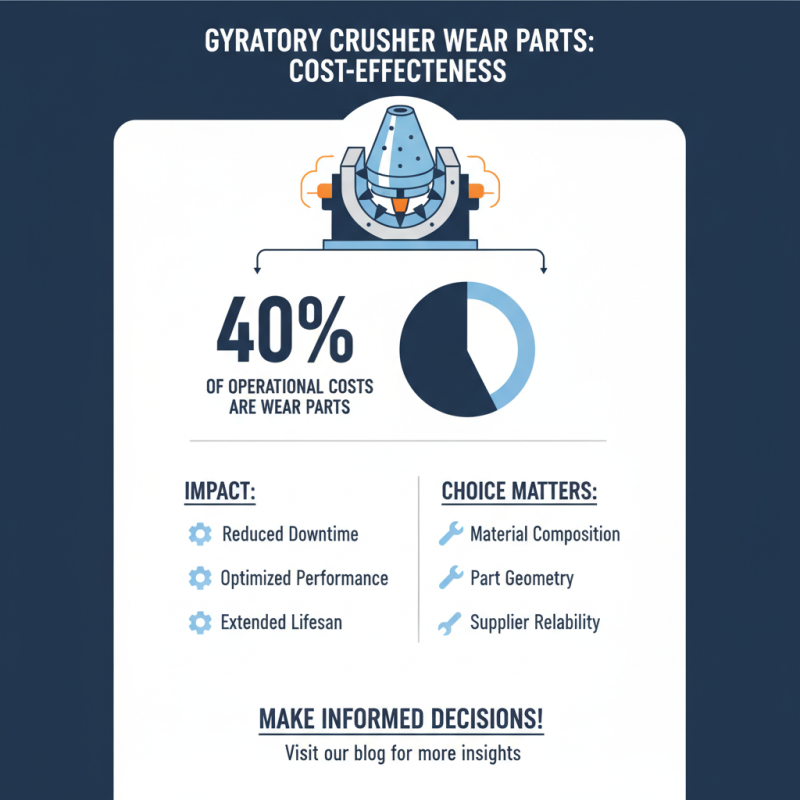
Choosing the right wear parts for gyratory crushers can significantly impact cost-effectiveness. Data analysis shows that wear parts constitute up to 40% of overall operational costs. Understanding this can help operators make informed choices.

A study found that quality wear parts can reduce replacement frequency by 30%. Longer-lasting parts mean less downtime. Operators might save on labor and maintenance costs. However, the initial investment might be higher. Balancing quality and price is essential but tricky.

Some sources report that many companies opt for cheaper materials. This often leads to increased wear and more frequent replacements. A careful evaluation of total cost of ownership (TCO) is key. This includes purchase price, installation costs, and operational implications. Data indicates that over 60% of companies don’t routinely analyze TCO. This gap highlights a need for improved decision-making processes. Choosing wisely can make a significant difference in profitability.