How to Choose the Right Mining Jaw Crusher for Your Operations?
Choosing the right Mining Jaw Crusher is crucial for efficient operations. The global mining equipment market is projected to reach $368 billion by 2027, driven by rising demand for minerals. A well-selected Mining Jaw Crusher improves productivity and reduces operational costs.
According to industry expert Dr. Emily Carter, "The right Jaw Crusher can significantly enhance mining efficiency." This highlights the importance of careful selection. Miners often grapple with various models, sizes, and specifications. Some may overlook these details and face costly setbacks.
Investing in a quality Mining Jaw Crusher pays off. Proper research can lead to better performance and longevity. However, many companies still make hasty decisions, leading to underperformance. Addressing these issues early can prevent future complications in mining processes.
Understanding the Basics of Mining Jaw Crushers
Mining jaw crushers play a critical role in the extraction process. These machines crush large rocks into smaller, manageable sizes. Understanding how they operate is vital for selecting the right model for your mining operations. Most crushers work using a two-part system, consisting of a movable jaw and a stationary jaw, creating a V-shaped chamber. This design greatly influences performance efficiency.
The size of the feed opening matters. A larger opening allows bigger rocks, but may reduce overall crushing efficiency. Reports indicate that operations with too large a feed opening often experience increased wear rates and downtime. It's crucial to find a balance that suits your material and production goals.
Tip: Consider the material characteristics before choosing a model. Harder ores require stronger jaw crushers. It's also important to analyze the production rate. Operations frequently underestimate their daily output needs, leading to equipment inadequacy.
Preventive maintenance is key for longevity. Regular inspections reveal wear patterns and help manage operational costs. The wrong choice in crusher type can lead to excessive wear and reduced productivity. Reflect on past experiences to avoid similar mistakes. Always be willing to adapt and upgrade your equipment as your operational needs evolve.
Key Factors to Consider When Selecting a Jaw Crusher
When selecting a jaw crusher for mining operations, several key factors come into play. The crusher's capacity is paramount. According to industry reports, a jaw crusher’s production capacity can range from 1 to 1,000 tons per hour. Understanding your required throughput is essential. This ensures you choose a model that aligns with your operational needs. A mismatch in capacity could lead to operational inefficiencies.
Another vital factor is the size of the material being processed. Jaw crushers are designed for varying sizes of input materials. In some cases, rocks can be as large as one meter in diameter. The wrong choice can lead to blockages or excessive wear. Proper screening and material handling should be assessed. Furthermore, the material's hardness affects the wear rates on the crushing plates.
Consideration of the energy consumption is also important. Many modern jaw crushers are designed for energy efficiency, consuming less than 15 kWh per ton of crushed material. However, models can vary widely. Some specific tasks might require a trade-off between energy use and processing speed. It’s vital to analyze these aspects to optimize your operations. Balancing all these factors can be complex, yet it’s important not to cut corners in decision-making.
Comparing Different Types of Mining Jaw Crushers
When selecting a mining jaw crusher, understanding the variations is vital. Different types cater to distinct needs in the mining process. For instance, some models focus on reducing larger rocks to manageable sizes. Others are designed for high throughput with lower energy costs. Each type has its unique operational advantages.
Industry reports indicate that a single toggle jaw crusher can yield a reduction ratio of up to 6:1. This design often results in a simpler and lighter machine, ideal for smaller operations. On the other hand, a double toggle jaw crusher allows for a higher level of crushing force and is typically used in larger scale operations. Yet, it can be more complex to maintain, which is a significant consideration for mining firms.
While both types offer valuable benefits, operational challenges exist. For example, some machines may wear out prematurely due to poor maintenance practices. Proper installation and regular servicing enhance performance longevity. Cost analysis shows that upfront investment varies. However, the long-term operational costs will influence the total expenditure. Careful consideration of these factors leads to more informed decisions in selecting the right crusher.
How to Choose the Right Mining Jaw Crusher for Your Operations?
| Type of Jaw Crusher |
Feed Size (mm) |
Capacity (tons per hour) |
Power (kW) |
Application |
| Single Toggle Jaw Crusher |
600 |
120 |
75 |
Primary crushing, rock quarries |
| Double Toggle Jaw Crusher |
800 |
150 |
110 |
Crushing hard stones |
| Horizontal Shaft Impact Crusher |
700 |
100 |
90 |
Secondary crushing, recycling |
| Mobile Jaw Crusher |
500 |
80 |
55 |
On-site mobile crushing |
Evaluating Performance Metrics for Jaw Crushers
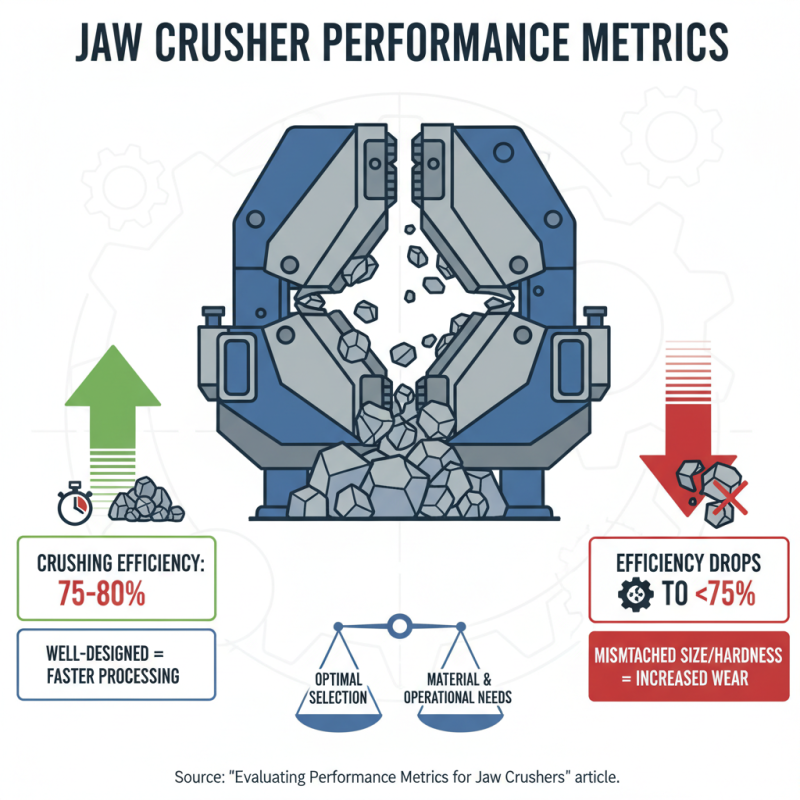
When selecting a jaw crusher for mining operations, evaluating performance metrics is crucial. Crushing efficiency is one key metric. Studies indicate that a well-designed jaw crusher can achieve an efficiency rate of about 75-80%. This means significant material processing in a shorter time frame. However, if the crusher is not well-matched to the intended material size and hardness, this efficiency can drop. Misalignment between crusher specifications and operational needs can lead to increased wear and tear.
Another important metric is throughput. High-quality jaw crushers can process up to 1,500 tons of material per hour in optimal conditions. Yet, if the feed size exceeds recommended limits, throughput suffers. Data shows that an oversized feed can reduce production by 20-30%. Monitoring these metrics ensures that operational goals are met without incurring excessive downtime. Regular performance assessments help in identifying potential inefficiencies early, allowing for timely adjustments.
Additionally, maintenance frequency affects performance. Crushers that require frequent repairs can drastically hinder operations. Reports highlight that a poorly maintained jaw crusher might need servicing every few weeks, while well-maintained machines can operate for months without issues. Striking the right balance between performance metrics and maintenance schedules is essential for maximizing productivity.
Maintenance and Longevity Considerations for Jaw Crushers
When selecting a jaw crusher, maintenance is crucial for longevity. Regular inspections can uncover wear and tear before they become serious issues. Keeping the machine well-greased is important. Lack of lubrication can lead to friction and quickly degrade parts.
Operators should also establish a routine for replacing wear parts. These include jaws, bearings, and other components. Monitoring the wear levels helps avoid unexpected downtime. Additionally, ensuring proper alignment of the crusher aids in better performance. Misalignment can cause premature failure, leading to costly repairs.
Training the staff is another essential aspect. Operators must understand how the equipment works. They should know how to spot early signs of trouble. Proper training often gets overlooked. Neglecting this can result in mistakes that affect production. Investing in maintenance can pay off significantly over time.