How to Choose the Right Cone Crusher Bowl Liner for Your Needs?
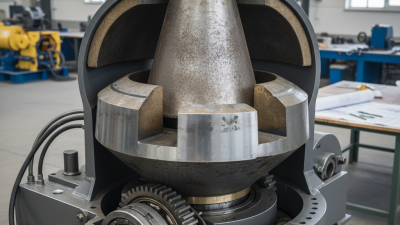
Choosing the right Cone Crusher Bowl Liner is critical for optimal performance in the crushing industry. Industry expert John Smith, a mechanical engineer with over 15 years of experience, emphasizes, “The effectiveness of a cone crusher often hinges on the quality of its bowl liner.”
A Cone Crusher Bowl Liner is not just a component; it’s a key player in the crushing process. Its design and material can significantly influence the crusher's efficiency and lifespan. Understanding the specific needs of your operation is essential. Are you focused on durability or immediate performance? These decisions carry weight and can lead to costly mistakes if misaligned with operational goals.
Selecting the appropriate bowl liner involves examining factors like material composition and design. But it’s easy to overlook smaller nuances, such as the fitting and compatibility with your existing setup. The wrong choice may lead to suboptimal results. Thus, reflecting on these considerations can yield a more informed selection process.
Understanding the Functionality of Cone Crusher Bowl Liners
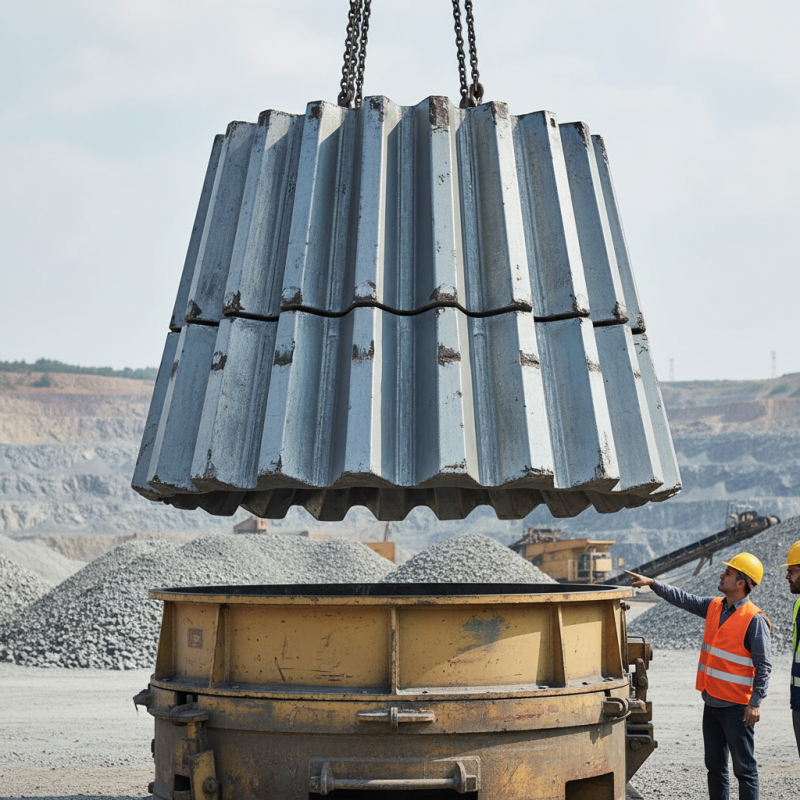
Cone crusher bowl liners play a crucial role in the overall efficiency of the crushing process. They maintain the geometry of the crusher. This helps to prevent material flow issues. A well-designed bowl liner can increase the lifespan of the machine. According to industry reports, improper selection can lead to a decrease in production by as much as 20%.
The functionality of a cone crusher bowl liner is largely dependent on its material composition and design. High manganese steel is a popular choice due to its work-hardening properties. However, using too much of it can lead to premature wear. Some operations may struggle to balance durability with performance. Adjusting the liner's profile can also optimize the reduction ratios. Yet, it often requires trial and error to find the perfect fit.
Different applications will demand different liner styles. More aggressive designs can handle harder materials but wear out faster. Conversely, smoother profiles may suit softer materials but offer less crushing efficiency. It is essential to constantly review wear rates and adjust strategies accordingly. Regular inspection reports and wear analysis are helpful tools in this regard. Auxiliary equipment must also be considered to fully understand the material flow and wear characteristics.
How to Choose the Right Cone Crusher Bowl Liner for Your Needs?
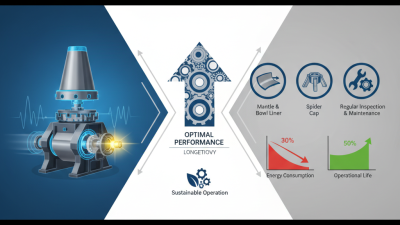
This chart displays the average wear resistance and cost-effectiveness of different materials used for cone crusher bowl liners. Selecting the right material can significantly impact operational efficiency and longevity.
Material Composition of Cone Crusher Bowl Liners: Key Considerations
When selecting a cone crusher bowl liner, material composition is crucial. The most common materials include manganese steel, alloy steel, and chrome-molybdenum steel.
Manganese steel is known for its high impact strength and ductility. It easily withstands heavy loads. This makes it a popular choice for many operations.
Alloy steel offers better wear resistance. Its durability can lead to lower replacement costs. However, it's less flexible under impact than manganese steel. Chrome-molybdenum steel combines toughness and hardness. This can be beneficial for high-throughput applications. Each material has its advantages and disadvantages, depending on the specific application.
Manufacturers often face challenges in sourcing the right material. The ideal balance between toughness and wear life is hard to achieve. Misjudgments in material selection may lead to premature wear or failure. Moving forward, it's important to analyze operational conditions. Consider factors like material size, hardness, and processing requirements for optimal results.
Comparing Different Bowl Liner Profiles and Their Performance
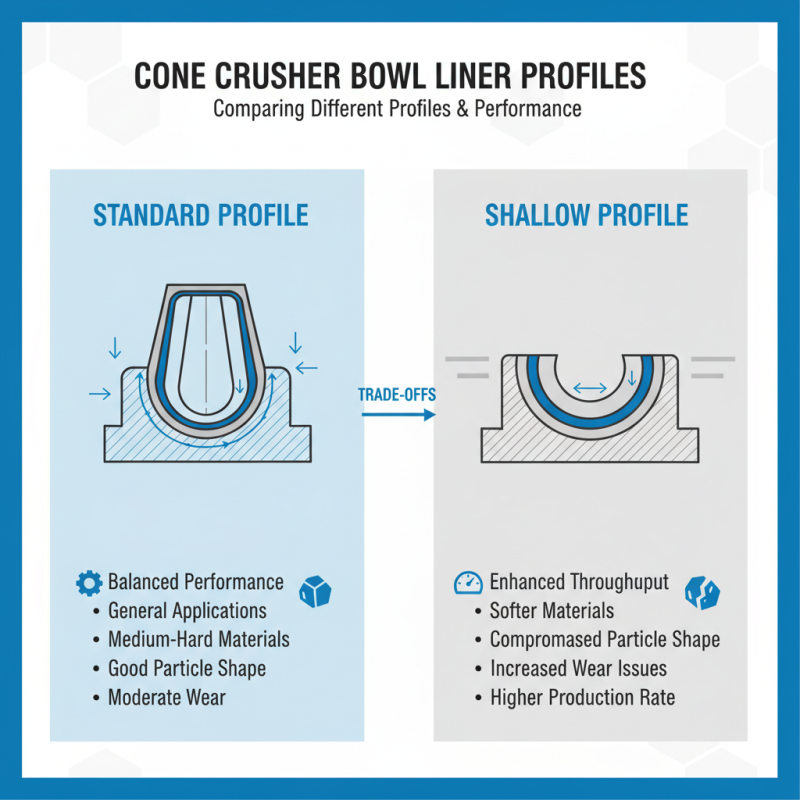
When selecting a cone crusher bowl liner, understanding the different profiles is crucial. Bowl liners come in various shapes, each designed for specific tasks. For instance, a standard profile provides balanced performance for general applications. It works well for medium-hard materials. In contrast, a shallow bowl liner may enhance throughput but could compromise particle shape. This trade-off can lead to wear issues.
Each liner profile affects wear patterns and overall lifespan. A steep profile can yield higher reduction ratios, but excessive wear might occur in certain materials. Operators need to consider the material characteristics they will process. Analyzing wear tests is key to making informed decisions. Evaluate your current liner performance regularly. Adjustments based on these assessments can lead to improved efficiency. It's not just about picking a liner but understanding its behavior under real conditions. Fine-tuning your choice minimizes downtime and enhances productivity.
Analyzing the Impact of Bowl Liner Thickness on Durability
When selecting a cone crusher bowl liner, thickness plays a crucial role in durability. The right thickness affects not just the lifespan of the liner but also the overall performance of the crusher. A thicker liner often means enhanced wear resistance, making it suitable for demanding applications. In contrast, a thinner liner may provide better crushing efficiency but at the cost of shorter lifespan. It’s essential to carefully consider the specific needs of your operation.
The impact of bowl liner thickness also ties into the material being processed. Harder materials may wear down thinner liners faster. Thus, the choice must reflect your crushing environment. Regular monitoring of liner wear can inform decisions about thickness for future replacements. This evaluation not only optimizes performance but can also reduce long-term costs associated with frequent replacements.
Choosing the wrong thickness can lead to suboptimal performance. It’s often a trade-off between durability and efficiency. Reviewing past experiences and evaluating performance metrics can help in making informed decisions. Each application is unique. Therefore, reflection on past choices can guide future investments for improved outcomes.
Choosing the Right Bowl Liner Based on Material Hardness and Application
When selecting a cone crusher bowl liner, it's essential to consider the material hardness and the specific application. Industry data suggests that bowl liners made from high manganese steel outperform standard options in terms of wear resistance. According to a recent report by the Institute of Mining and Metallurgy, these liners can last up to 30% longer under high-impact conditions. This durability is crucial for operations dealing with harder rock materials, as wear can be a significant operational cost.
Furthermore, different applications demand different liner profiles. For instance, a fine crush profile may excel in producing smaller particle sizes for asphalt aggregates. Conversely, a course profile may be more effective for larger aggregate production. According to a study by the Society for Mining, Metallurgy, and Exploration, using the wrong liner can reduce efficiency by more than 15%. This is a stark reminder that while it’s easy to overlook liner selection, making informed choices can significantly enhance overall productivity and output quality.
Choosing the right bowl liner is not simply a matter of preference. It's about understanding operational demands and material characteristics. Too often, operators stick to traditional practices without assessing their requirements. Understanding the minerals being crushed can lead to smarter decisions, optimizing the life span of the bowl liner and overall performance of the crusher.