Leave Your Message

How to Choose Cone Crusher Components in 2026?

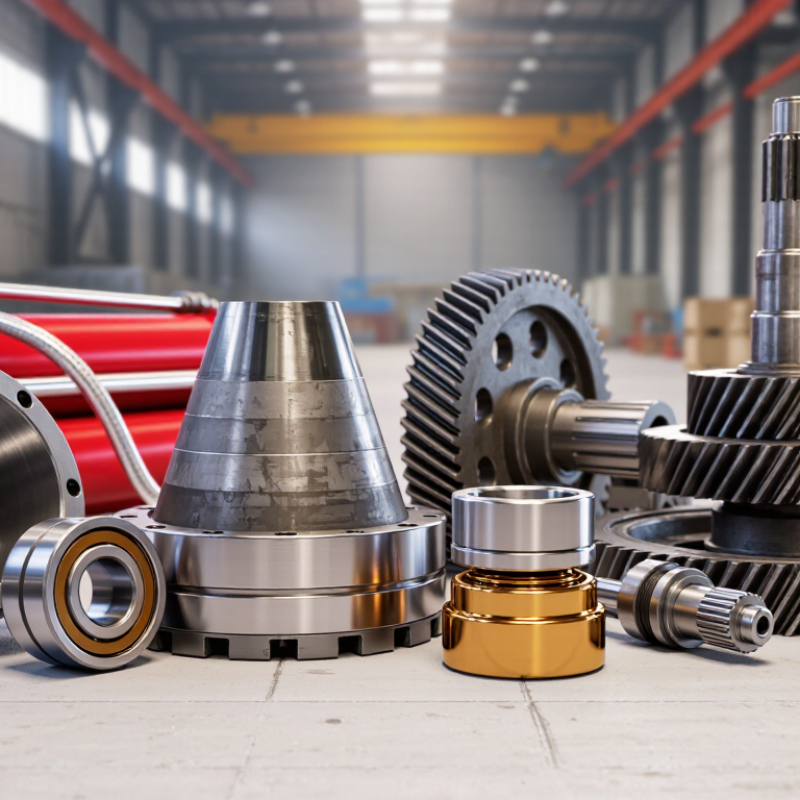
Choosing Cone Crusher Components in 2026 requires more than comparing prices. A component may look suitable on paper, yet fail under abrasive stone, uneven feed, or long operating hours. Experienced quarry teams examine the complete crushing circuit, not one isolated part. They check the mantle, concave, eccentric bushing, thrust bearing, gear set, liners, and hydraulic system together.

“Component selection must follow the material, the machine, and the operating conditions,” says Mike Wilton, a crushing equipment specialist. That principle remains practical in 2026. A harder mantle can improve wear life, but it may reduce throughput if the chamber is poorly matched. A cheaper bearing may fit correctly, yet create costly vibration later. Small differences matter.

Start with the feed size, rock hardness, moisture, and target product shape. Measure actual wear patterns, rather than trusting assumptions. A concave worn heavily on one side may reveal poor feeding or an alignment problem. Dust around the frame can suggest sealing trouble. Unusual noise deserves attention.

Details matter most.

Reliable buyers also verify material certificates, dimensional tolerances, heat treatment, and supplier traceability. Original equipment parts are not always the only reasonable choice, but unverified replacements can create serious uncertainty. I have seen maintenance plans fail because teams selected components by model number alone. That shortcut feels efficient. It is not.

This guide explains how to compare Cone Crusher Components, evaluate supplier evidence, and balance purchase cost against service life. Some recommendations will remain conditional, because every site behaves differently. That is the honest limitation. Real performance depends on inspection, installation, feed control, and disciplined maintenance.
How to Choose Cone Crusher Components in 2026?

Understanding Cone Crusher Components and Their Functions

How to Choose Cone Crusher Components in 2026?

Understanding Cone Crusher Components and Their Functions

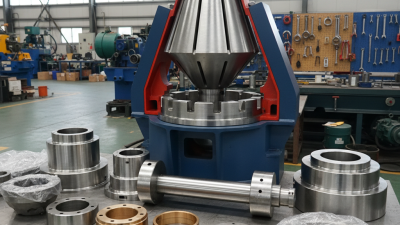
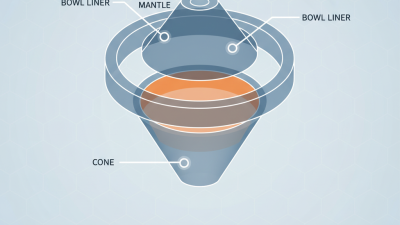
A cone crusher works as a coordinated system, not a collection of isolated parts. The mantle moves against the concave, compressing stone inside the crushing chamber. Their profiles control the feed opening, reduction ratio, and product shape. A worn liner can increase power use and create uneven discharge. During inspections, technicians should measure liner thickness at several points. One reading is not enough.

The eccentric assembly controls the mantle’s gyrating motion. The main shaft carries heavy crushing loads, while bearings support rotation and limit friction. Lubrication passages must remain clean and correctly pressurized. Small contamination can damage polished surfaces quickly. Hydraulic components adjust the setting and help protect the machine from uncrushable material. Pressure records may reveal trouble before overheating becomes obvious.

Component selection should match feed size, hardness, moisture, and expected capacity. Check dimensions, clearances, verified material certificates, and service history before ordering replacements. Modern monitoring systems can track vibration, oil temperature, and liner wear. However, sensors still need practical interpretation. Data alone does not repair a misaligned part. A perfect selection is rare. Operating conditions change throughout a season. Review early performance and revise the choice when evidence challenges the original plan.
How to Choose Cone Crusher Components in 2026?

Cone crusher components are selected according to their main operating role. Wear parts protect the crushing chamber, support components carry loads, and adjustment and lubrication systems control product size and machine reliability.

The chart shows the number of major cone crusher components commonly associated with each core function. Mantles and bowl liners form the crushing chamber, while the main shaft, eccentric assembly, bearings, hydraulic adjustment system, and lubrication system support operation, control, and protection.

Matching Components to Crusher Type and Operating Conditions

How to Choose Cone Crusher Components in 2026?

Matching Components to Crusher Type and Operating Conditions

Component selection should begin with the crusher’s design, not a parts catalogue. A standard cone crusher often needs a different liner profile than a short-head model. The mantle and concave must match the chamber, feed opening, and required product size. Using the wrong profile can increase recirculation and raise power demand. Check the manufacturer’s drawings, installation dimensions, and approved material specifications before ordering.

Operating conditions matter just as much. Hard, abrasive rock usually requires wear-resistant manganese components with suitable work-hardening performance. Wet or sticky feed may need a more open chamber profile to reduce packing. Measure the closed-side setting, feed gradation, throughput, and discharge temperature during real production. Do not rely only on last year’s settings. I have seen a seemingly correct liner fail early because the feed became finer and more abrasive. That assumption was costly. Component life is not perfectly predictable.

Tips

Record liner wear at fixed intervals. Compare the mantle and concave wear patterns, not only their remaining thickness. Inspect eccentric bushings, thrust bearings, and seals when vibration or temperature changes appear. Keep one verified spare set for critical components. Compatibility matters more than appearance. A small dimensional error can create uneven loading, unstable product grading, or unexpected downtime. Recheck torque values after installation, because rushed maintenance sometimes leaves hidden movement.

Evaluating Material Quality, Wear Resistance, and Service Life

How to Choose Cone Crusher Components in 2026?

Material quality should match the feed, not only the machine specification. The USGS Mineral Commodity Summaries 2025 reports about 2.5 billion metric tons of iron ore mined globally in 2024. That volume reflects the severe abrasive conditions found in many crushing operations. High-chromium white iron often suits abrasive, dry feed. Tougher manganese steel may perform better when impact and chamber pressure dominate.

Hardness alone can mislead.

Component selection should include chemical composition, casting quality, and heat-treatment records. ASTM G65 provides a controlled abrasive wear test using a rubber wheel and quartz sand. Ask suppliers for mass-loss results under comparable testing conditions. A lower mass loss usually indicates stronger wear resistance, but laboratory results cannot fully reproduce wet ore, tramp events, or uneven feed.

Service life depends on operating discipline as much as metallurgy. Track liner thickness, closed-side setting, feed distribution, and tonnes processed. Replace parts using measured wear rates, not calendar dates.

In field inspections, a component losing 2 millimeters per 100 operating hours may need earlier replacement than one losing 1 millimeter under similar feed.

However, this calculation becomes unreliable when measurement points change. That is a common weakness in maintenance records. Keep photographs, weigh removed parts, and connect each result with feed moisture and hardness data. ASTM E18 hardness checks can support quality control, but they should not replace production evidence.

Checking Compatibility, Dimensions, and Installation Requirements

How to Choose Cone Crusher Components in 2026?

Checking Compatibility, Dimensions, and Installation Requirements

Selecting cone crusher components starts with compatibility, not price. The mantle, concave, eccentric assembly, and hydraulic parts must match the crusher’s model and operating configuration. Check the equipment manual, technical drawings, and previous service records before ordering. A component can look correct while using a different alloy, profile, or mounting arrangement. Fit is not enough.

Measure twice. Confirm the chamber dimensions, feed opening, shaft diameter, bolt pattern, and liner seating surfaces. Record measurements in millimeters, then compare them with the supplier’s certified drawings. Check clearances around the head, bowl, and hydraulic lines. Even a small dimensional error can create uneven wear, vibration, or difficult adjustment during operation. I have seen installation delays caused by overlooked washer thickness and thread direction.

Installation requirements deserve equal attention. Review lifting points, component weight, torque values, lubrication needs, and required tools before shutdown. Keep contact surfaces clean and inspect threads for damage. Do not force a part into position; resistance often indicates misalignment or an incorrect specification. A second technician should verify critical measurements and tightening sequences. This extra check may feel slow, but it is cheaper than removing a newly installed component. Some field assumptions still fail, especially when older drawings do not match the machine’s current condition.

Comparing Costs, Suppliers, and Long-Term Maintenance Needs

How to Choose Cone Crusher Components in 2026?

Component cost should be judged against production loss, not the purchase invoice alone. A low-priced mantle may save money initially, but poor fit can increase vibration and uneven liner wear. Ask suppliers for material certificates, dimensional inspection records, and clear warranty terms. Reliable suppliers should explain manufacturing tolerances without avoiding difficult questions. They should also provide realistic lead times and maintain critical parts in regional stock.

Maintenance needs often decide the better investment. Check whether the component allows practical inspection with standard tools. For example, operators should measure liner thickness, monitor oil temperature, and inspect bushings during scheduled shutdowns. A supplier that offers installation guidance and wear data adds measurable value. Spare seals and fastening hardware should be available, too. Small missing parts can delay a full shift.

Look beyond projected service life. Actual results depend on feed size, moisture, liner profile, and operator habits. Forecasts are never perfect. I have seen a component with excellent test results underperform in a dusty, poorly adjusted plant. That experience makes field references more useful than polished claims. Compare the full cost over twelve months, including freight, labor, downtime, inspections, and emergency replacement. A slightly higher purchase price may be sensible when performance records are verifiable. Yet paying more without evidence is not professionalism; it is only a more expensive guess.

How to Choose Cone Crusher Components in 2026? - Comparing Costs, Suppliers, and Long-Term Maintenance Needs

Component Primary Function Typical Purchase Cost (USD) Typical Service Life* Common Supplier Type Typical Lead Time Maintenance Requirements Best Selection Priority
Mantle Protects the moving crushing surface and forms part of the crushing chamber. $1,200–$8,000 400–1,500 operating hours Original-equipment, aftermarket, or foundry supplier 2–12 weeks Check wear profile, locking system, seating surfaces, and tightening torque during liner changes. Correct fit, alloy selection, and wear rate
Concave or Bowl Liner Protects the fixed crushing surface and determines the chamber profile. $1,500–$10,000 300–1,300 operating hours Original-equipment, aftermarket, or foundry supplier 2–12 weeks Monitor liner thickness, feed distribution, crushing pressure, and the risk of packing or uneven wear. Chamber compatibility and application-specific alloy
Mantle Nut and Locking Assembly Secures the mantle to the cone head and maintains proper clamping force. $250–$2,000 1,000–5,000 operating hours Specialist component supplier or machine-shop supplier 1–8 weeks Inspect threads, contact surfaces, locking features, and signs of loosening or distortion. Thread accuracy and safe installation procedure
Eccentric Bushing Supports the eccentric motion that drives the gyrating crushing head. $1,000–$7,500 3,000–12,000 operating hours Original-equipment or precision-machining supplier 4–16 weeks Maintain correct lubrication, check clearance, monitor oil temperature, and inspect for scoring. Material quality, dimensional accuracy, and oil compatibility
Thrust Bearing or Thrust Plate Carries axial loads generated during crushing and supports smooth rotation. $800–$6,000 5,000–20,000 operating hours Bearing manufacturer, original-equipment, or aftermarket supplier 2–14 weeks Control oil cleanliness, temperature, axial play, surface wear, and installation alignment. Load rating, lubrication performance, and fit
Main Shaft Transfers crushing forces and supports the head and mantle assembly. $8,000–$45,000 15,000–40,000 operating hours when correctly maintained Original-equipment or certified heavy-machining supplier 8–30 weeks Use non-destructive inspection during major overhauls and check for cracks, taper wear, and deformation. Steel grade, heat treatment, dimensional control, and inspection records
Pinion and Gear Set Transmits rotational power to the eccentric assembly. $4,000–$25,000 10,000–30,000 operating hours Gear specialist, original-equipment, or precision-machining supplier 8–24 weeks Measure backlash and tooth contact, verify lubrication, and inspect for pitting, scoring, or abnormal noise. Heat treatment, tooth accuracy, backlash, and lubricant specification
Hydraulic Adjustment or Release Cylinder Adjusts the closed-side setting and helps protect the crusher from uncrushable material. $1,500–$12,000 5,000–15,000 operating hours Hydraulic specialist, original-equipment, or aftermarket supplier 3–16 weeks Check seals, rod condition, hydraulic pressure, hose connections, and fluid contamination. Pressure rating, seal quality, compatibility, and service support
Oil Pump, Filter, and Cooler Package Provides clean, temperature-controlled lubrication for bearings, gears, and bushings. $1,000–$9,000 5,000–20,000 operating hours, excluding consumable filters Industrial fluid-power or original-equipment supplier 2–12 weeks Replace filters according to oil condition, inspect leaks, clean coolers, and verify flow and pressure. Correct flow rate, filtration level, cooling capacity, and spare-part availability
Main Frame and Adjustment Ring Supports the crusher assembly and holds the adjustment and crushing chamber components. $10,000–$60,000 20,000–50,000 operating hours when free from overload damage Original-equipment or certified heavy-casting supplier 12–36 weeks Inspect welds, threads, seating surfaces, bolt holes, and casting areas for cracks or distortion. Structural integrity, dimensional accuracy, traceability, and warranty
Note: Cost, service-life, and lead-time figures are indicative 2026 planning ranges in USD for commonly used cone-crusher components. Actual values vary with crusher size, material abrasiveness, alloy specification, operating hours, shipping terms, machining requirements, and supplier location. Confirm dimensions, metallurgical certificates, inspection records, and warranty terms before purchase.