China Top 10 Jaw Crushers How Do They Work?
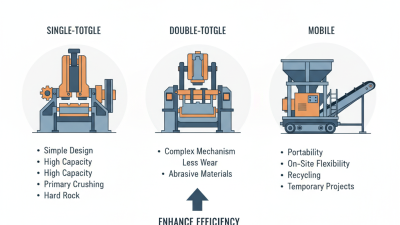
China’s jaw crusher market spans compact quarry units, large mine-duty machines, and mobile plants built for changing sites. Understanding Jaw Crusher Working principles makes brand comparisons more useful. It also helps buyers distinguish practical capacity from a headline specification. The details matter.
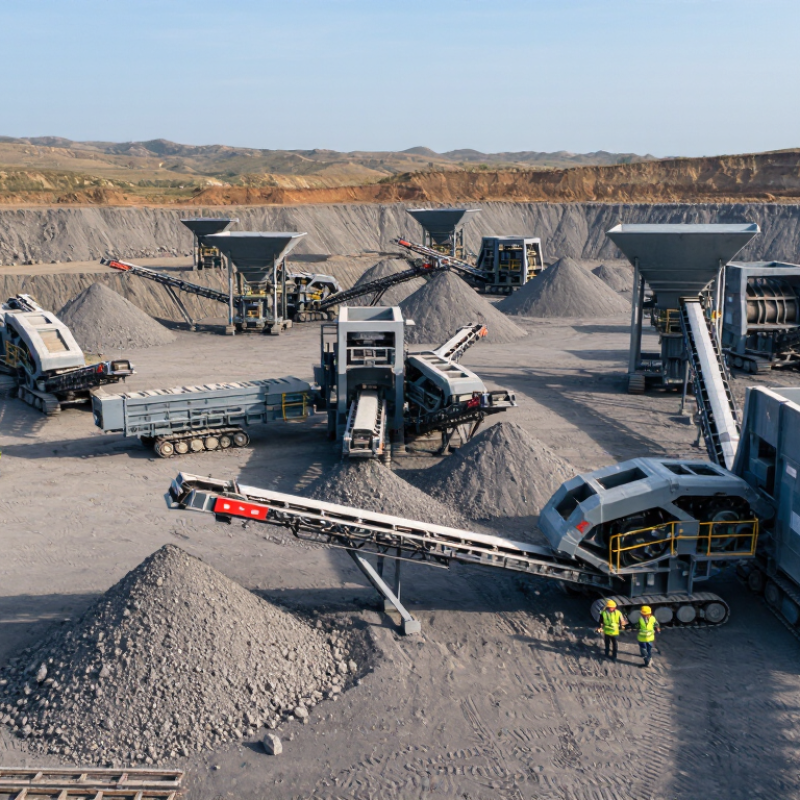
UNEP’s 2022 Sand and Sustainability report estimates that people use about 50 billion tonnes of sand and gravel worldwide each year. That figure describes broad material demand, not jaw crusher sales. Still, it shows why dependable primary crushing remains important at quarries and construction-material operations. A crusher’s actual output depends on feed size, rock hardness, moisture, settings, and maintenance.
In a jaw crusher, a moving jaw presses material against a fixed jaw, breaking rock through compression. Operators adjust the discharge opening to influence product size. Feed rocks tumble into the chamber; sharp edges and steady vibration are part of the daily scene. Simple in principle. Not effortless in practice. Wear plates, bearings, motor power, and blocked-feed risks all affect performance.
This guide compares ten Chinese jaw crusher options through their design, stated capacity, applications, and service considerations. Manufacturer figures are not always measured under identical conditions, so treat them as starting points, not guarantees. A careful selection should match the machine to the material, target output, and site conditions. Even a well-ranked model may be the wrong fit.
Jaw Crusher Basics: The Typical 4:1–6:1 Size-Reduction Ratio
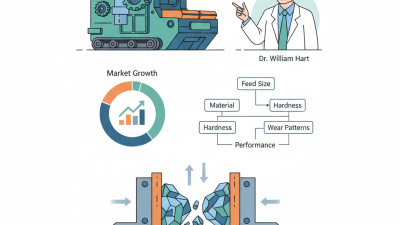
A jaw crusher reduces rock by compression. An eccentric shaft drives one jaw toward a fixed jaw, then pulls it away. Feed enters from above, and smaller pieces drop through the discharge opening. The reduction ratio compares feed size with product size. A 600 mm feed reduced to 100–150 mm gives roughly 4:1–6:1. That is the ratio. Not a promise. The actual product depends on jaw setting, rock strength, particle shape, and wear.
In practice, operators check the discharge with a tape measure or screen sample, rather than trusting the setting alone. A tighter gap may produce smaller material, but it can also reduce throughput and raise wear. Moisture and sticky fines can complicate discharge. The U.S. Geological Survey’s Mineral Commodity Summaries 2024 estimates U.S. crushed-stone production at about 1.5 billion metric tons in 2023, illustrating the scale of material handled by crushing operations. That figure covers an entire sector, not jaw crushers alone. A 4:1–6:1 ratio is a useful planning range, but real rock rarely behaves so neatly.
How the Eccentric Shaft Moves the Jaw Through Each Crushing Cycle
Inside a jaw crusher, the eccentric shaft rotates continuously, driven by a motor and flywheel. Its offset journal raises and lowers the pitman, which supports the moving jaw. The movement is short, but the force is substantial. A toggle plate transfers motion through the linkage, drawing the jaw toward the fixed jaw and then pulling it away. That repeated movement creates each crushing cycle.
As the jaws close, rock is compressed against the fixed surface and may fracture along natural weaknesses. On the opening stroke, the gap widens and crushed material can move downward under gravity. Smaller pieces pass through the discharge opening; larger pieces remain for another cycle. The exact motion and product size depend on the crusher’s geometry and adjustment. Not every fragment breaks neatly.
In practice, the cycle is not perfectly tidy. Feed size, moisture, and uneven loading can change how smoothly material moves through the chamber. Operators can listen for unusual knocks and watch for changes in throughput, but those signs need careful interpretation. A steady shaft rotation alone does not guarantee consistent crushing; the toggle, bearings, and jaw surfaces also need regular inspection.
Comparing China’s Top 10 Models by Feed Size and Rated Capacity
China’s ten leading jaw-crusher models are best compared by maximum feed size and rated capacity, not output figures alone. Across commonly listed configurations, feed openings range from compact units handling roughly 300 mm rock to heavy-duty machines accepting material above 1,000 mm. Rated capacity may span about 10 to more than 1,000 tonnes per hour. These figures are reference points, not promises; rock hardness, moisture, and discharge setting change real output.
A small model can suit a narrow quarry face or a recycling line with steady, pre-sorted feed. Larger machines need room for loading and stronger supporting equipment. Check the feed opening against the largest stone, not the average. A 500 mm chunk can stall a machine whose limit looks close on paper.
Capacity matters too. A unit rated at 200 tonnes per hour may deliver less when crushing abrasive, slab-shaped rock.
Compare all ten models using the same conditions: feed size, material type, and desired product size. Ask whether the rated capacity assumes a tight or wide discharge setting. That detail is often missed. Published tables rarely describe every test condition, so treat precise comparisons with care. I would also verify motor power, jaw-plate options, and maintenance access before choosing. A specification sheet cannot show how easily a liner can be changed on a dusty site.
Jaw Plates, Nip Angle, and Wear: Essential Checks for Safe Operation
Jaw plates do more than resist abrasion; their profile helps grip rock and guide it downward.
During a shutdown, inspect the fixed and moving plates for cracks, loose fasteners, uneven wear, and packed fines.
Use isolation and the site’s lockout procedure before entering the crushing chamber. Never reach into a blocked crusher.
Small defects matter.
The nip angle is the angle between the jaw faces where material is gripped. If it is too wide for the feed, rounded stones may slip or bounce instead of breaking.
Watch for repeated slipping, unusual vibration, or a changing product size; each can signal a feed or setting problem.
Do not adjust settings by guesswork. Follow the machine manual, and have a qualified operator verify the closed-side setting, feed size, and plate compatibility.
Wear rarely stays even. A worn lower section, polished patches, or a thin plate edge can reduce grip and expose the jaw seat. Record plate thickness at consistent points, compare both sides, and replace parts within the stated limits. Uneven wear may also reflect off-center feeding, not just plate quality.
A quick visual check is useful, but it cannot replace measured inspection.
That distinction is easy to overlook on a busy shift.